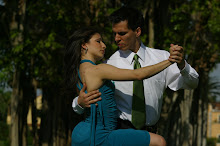
Maestro Dassieu dances an amazing Tango Vals
http://www.youtube.com/watch?v=VqgujDIWlOc
Interview by Irene Ho, with most sincere thanks to Veronica Roldan for her invaluable assistance with this translation and with the formation of the questions.
In a tango world increasingly filled with charlatans and pretenders, where every week brings us new fads and new tricks – watching Alberto Dassieu dance is a revelation.
Dancers who are easily seduced by the showy acrobatic tricks and figures that seem to pass for tango these days may skip over videos of Alberto’s subtle but powerful performances in favour of videos of flashing legs, flying feet and dramatic poses. Only the sophisticated and passionate dancer would understand Alberto’s monumental achievement through his 55 years of experience in the milongas of Buenos Aires. Alberto’s Tango is Tango’s essence to the core: total intense unity in the close embrace with his partner and the music.
Although the Toronto Tango community did not have the good fortune to experience Alberto’s dancing firsthand when he travelled to North America last year to teach and perform, we are very fortunate that Alberto has graciously granted this TATA exclusive: his first North American interview.
En un mundo del tango lleno de charlatanes y de pretendientes, donde cada semana nos traen nuevos caprichos y nuevos trucos, el baile de Alberto Dassieu es una revelación.
Los bailarines que son seducidos fácilmente por los trucos y las figuras acrobáticas y prefieren los videos de piernas que destellan, de pies que vuelan y de actitudes dramaticas pueden faltar los videos sutiles y poderosos de Alberto. Solamente el bailarín sofisticado y apasionado entendería el logro monumental de Alberto con sus 55 años de experiencia en las milongas de Buenos Aires. El Tango de Alberto es La Esencia del Tango: la unidad intensa y total en el abrazo cerrado con su pareja y la música.
Aunque la comunidad de Toronto Tango no tuvo la buena fortuna de conocer a Alberto cuando estuvo en Norteamerica el año pasado para enseñar, somos muy afortunados de que Alberto graciosamente ha concedido a esta exclusiva de Paradiso: su primera entrevista norteamericana.
1.¿Cuando empesaste a bailar Tango y que te motivo a hacerlo?
When did you start to dance Tango and what motivated you to start?
Empecé a bailar como curiosidad pues de tanto mirar la pista donde se bailaba, que daba a la parte trasera de mi casa yo nunca me perdí esos bailes. Este club se llama "All boys de Saavedra". Cuando venían las orquestas yo me sentaba en el escenario y hacía todos los gestos de los bandoneonistas. Al otro día, cuando en la radio sonaba un tango, yo tomaba un almohadón y hacía todos los gestos que había visto la noche anterior en un bandoneonista. Tenía en ese entonces 9 o 10 años. Luego, en las fiestas de familia, siempre me gustaba bailar. Mi madre disputaba con mi tía para quién bailaba conmigo. Ya me gustaba bailar.
I began to dance out of curiosity after much observation of dancing on the dance floor. I never missed those dances that were held in a club near the back of my house – a club called “All boys of Saavedra”. When the orchestras came to play there, I would sit on the stage and imitate all the gestures of the bandoneonistas. On other days, when the radio played a tango, I took a cushion and made all the gestures of the bandoneonistas that I had seen the previous night. I was 9 or 10 years old at that time. Then, I always loved to dance at family parties. My mother and my aunt argued over who would get to dance with me;I already liked to dance.
2. ¿Como practicaba la gente en ese entonces? ¿Que hacian para mejorar?
How did people practice in those days? What did they do to improve their dancing?
Las prácticas yo las conocí cuando yo ya bailaba en las milongas del centro de Bs. As. Las prácticas era lo que dice la palabra, practicar un paso, un giro. Entonces los chicos tratábamos de copiarnos algunas cosas. Lógico, que eso quedaba en cada uno de nosotros. Los que teníamos ya aún en nuestra juventud un estilo que no sé de dónde habrá salido en mi caso, yo trataba de mejorar algunas cosas. Eso eran las prácticas.
I was already dancing in the milongas in downtown Buenos Aires when I got to know the practicas. The “practicas” are exactly as defined by the word: to practice a step, a turn. Then, we boys all tried to copy certain things – only what was logical in each one of us. The ones like me, that regardless of our youth, already had a style of their own – for example, in my case, my style, I’m not sure where it came from. I tried to improve on some things; so those were the practicas for me.
3.¿Cómo aprendiaste bailar? ¿Para tomando lecciones con los profesores de baile, aprendaste yendo a los practicas y practicando con otros, o solo mirando otros bailarines en las milongas?
How did you learn to dance? Did you take classes from dance teachers, or did you learn by going to the practicas and practicing with others, or did you learn only by looking at other dancers in the milongas?
Cómo aprendí a bailar, creo habértelo dicho. Desde muy chiquito con mi madre y mis tías, y luego sin prácticas, sí mirando a los bailarines, me largué solo. Tenía 14 años. Mi padrino de bautismo en las milongas se llamó Alfredo Gobbi. Desde aquel día a la fecha, han transcurrido más de 55 años. Y todavía amo bailar.
How I learned to dance; I think I have spoken to you about this. Since I was very small I learned by dancing with my mother and aunts, and then without the practices; and yes looking at dancers, then I tried on my own; I was 14 years old. My godfather of baptism at the milongas was called Alfredo Gobbi [Alberto is referring to the great tango orchestra leader, whom he knew – IH]. From that day to this day, although 55 years have passed, I still love to dance.
4.¿Cual es la esencia en tu estilo de Tango?
What is the essence of your style of Tango?
La esencia en mi estilo de tango tiene un fundamento primordial y es la música. La música produce en mí una fascinación; nunca bailé, no bailo ni bailará un tango que no me llegue su música, y nunca lo practicaría sin música. No se puede bailar sin eso. No sería yo bailando un tango si no abrazase bien a la mujer para que ella sepa y pueda recibir todo lo que yo le estoy dando. Es mi baile, es mi estilo, es todo lo que siento por el tango. Muchas veces me piden bailar un tango. A veces lo acepto, otras no. Bailar para mí no es un capricho, bailar para mí es una entrega de 3 minutos bailando, entonces también me exijo a mí mismo con quién debo bailar para que esta persona sepa interpretar cuál es mi sentimiento.
The essence of my style of tango is firstly and fundamentally the music. The music fascinates me – I never danced, I do not dance nor will I ever dance a tango that its music doesn’t grab me and I would never practice dancing without music. It is not possible to dance without music. It wouldn’t be me dancing a tango if I do not embrace the woman well, so that she knows and can receive all that I am giving in the dance. It is my dance, it is my style, it is everything I feel for the tango. Often I am requested to dance a tango. Sometimes I accept, sometimes not. For me, to dance is not a whim; to dance for me is to give everything while dancing for 3 minutes. I’m also very strict with myself when I decide with whom to dance, so that person would be able to interpret the feeling.
5.¿Que cualidades consideras esenciales para ser un buen bailarin?
What are the qualities that you consider essential to be a good dancer?
Las cualidades son propias. Se puede agregar uno u otro paso, se puede con el tiempo corregir alguna postura, pero la esencia de este baile lo lleva uno adentro, y esa esencia es la que debe tener un bailarín. Después que sea bueno o no, es otra cosa.
The qualities are your own. One or another step can be added, the posture can be corrected in time. But the essence of the dance resides inside you, and that’s the essence that a dancer must have. After [achieving this], whether it is good or not, this is another question.
6.¿Que no toleras en una pareja bailando Tango?
What annoys you in some dancers when you see them dancing Tango?
Que traten de mostrarme a mí lo que ellos no sienten. Hablamos de un pareja en la pista, pues si están en un espectáculo queda en mí haberlo ido a ver. Muchas veces se preocupan por las figuras, hechas fuera de tiempo, sin compás, sin ritmo ni silencios, tratando de demostrar una destreza que el tango no exige. El tango es pasional, como tal se debe bailar y lo pasional no se demuestra,se siente.
People on the dance floor trying to show things that they do not feel. Now if they do that in a performance that’s different thing as it was my choice to go there and see it.Often these dancers are preoccupied with figures – doing them out of time, without compas, without rhythm and without silences – trying to demonstrate skills that tango does not call for. The tango is passion, and this is the way it should be danced – the passion is not to be demonstrated, but felt.
7. ¿Después de ver tu espectáculo “Milonguisimo” que por cierto lo encuentro fantástico, ver grandes milongueros como Oscar Hector y Teresita Brandon, Pedro Vujovich y Graciela Cano, Juan Esquivel y Susí Tilbe, Jorge Uzunian y Haydé Esther , Miguel Balbi, Horacio Prestamo, Elba Biscay y vos, me pregunta que significa para vos ser un “Milonguero”?
After seeing your fantastic show “Milonguismo” and seeing great “Milongueros” in the show like Oscar Hector and Teresita Brandon, Pedro Vujovich and Graciela Cano, Juan Esquivel and Susi Tilbe, Jorge Uzunian and Hayde Esther, Miguel Balbi, Horacio Prestamo, Elba Biscay and you, I would like to pose a question: what does it mean to you to be a “Milonguero”?
Debo agradecerte el concepto y que te haya gustado ver Milonguísimo. Este espectáculo, al cual he dejado de pertenecer, pues, después de tres años he querido tomarme un descanso. Pero no sería honesto de mi parte decirte qué es Milonguísimo. No es una cuestión económica por la cual estábamos en él ,sino era una cita de lunes y miércoles con nuestro arte, aunque a veces la sala no estuviese llena o hubiesen cinco personas, siempre lo bailamos con el mismo amor y el mismo respeto hacia el público. En cuanto a lo que significa ser "milonguero", creo habértelo dicho antes, pero te lo voy a volver a decir. Esta es una palabra que se puso de moda en Bs. As. hará unos 10 años, más o menos. Y que sacaron provecho algunos bailarines que en realidad eran lo que dice la palabra "milongueros", les gustaba ir a la milonga, disfrutar del baile, desde hace muchos años. Eso era, pero ahora ese rótulo de "milonguero" lo han tomado como si fuese un diploma y un estilo. No es ni una cosa ni la otra. El estilo es el que ya venís bailando desde tu juventud y que yo sepa, todavía no apareció el premio al milonguero. Pero también entiendo a las chicas que les guste bailar con estos señores, pues a su regreso dirán "bailé con el milonguero X" y eso les debe producir una gran alegría.
I have to thank you for your perception of the show “Milonguisimo” and for you seeing it. I’m no longer part of the show; after 3 years I decided to take a little break. But honestly I cannot tell you what is “Milonguisimo”. [The Show] was an appointment on Mondays and Wednesdays with our art. Whether the room was full or whether we only had five people, we always danced with the same love and same respect towards the audience. As for as what it means to be a “milonguero”, I think we have discussed this before, but let’s discuss this again. It is a word that became fashionable in Buenos Aires these 10 years more or less. It was of benefit to some dancers for whom in fact this word was coined – those who liked to go to the milonga, enjoyed dancing, and did it for many years. Now the label of “milonguero” is taken as if it was a diploma and a style. That is neither of those things. The style is the one you have been dancing since youth and, as far as I know there is no such a thing as a prize for being a “milonguero”. But I understand that to some ladies who like to dance with these gentlemen, if they can say after they return that “I have danced with milonguero so and so” – this produces in these ladies a great joy.
8.¿Consideras que alguien puede llegar a ser un verdadero milonguero sin haber bailada por 40 aňos y sin ser Argentino o porteňo?
Can someone be a true “Milonguero” without having danced Tango for 40 years, without being Argentinian or Porteno?
En esta pregunta te contestaré lo siguiente: sí, se puede ser un milonguero. No es necesario bailar 40 años ni ser argentino o porteño. Te tiene que gustar la milonga. Te tiene que gustar el tango. Te tiene que gustar transmitir esa música a todas las parejas con las cuales bailes. Y ahí, en ese instante o a partir de ese instante te darás cuenta de que sos un milonguero pues las chicas harán una pequeña preferencia por bailar contigo. Nada tiene que ver si naciste en el Polo Norte o en el Polo Sur, todo dependerá de cómo tú lo hagas.
I will answer your question as follows: Yes, it is possible to be a milonguero - it is not necessary to either dance 40 years or be Argentinian or Porteno. You need to love the milonga; you need to love the tango; you must love to transmit the music to all your dance partners with whom you dance. [You will realize what it is to be milonguero in that instant when the ladies will have a preference to dance with you.] It has nothing to do with whether you were born in the North Pole or the South Pole; it all depends on how you do it.
9.¿Como un bailarín y profesor experto de Tango, qué prefieres ser llamado - es apropiado utilizar una o toda de las palabras "Maestro" o "Tanguero" o "Milonguero"?
As a dancer and expert teacher of Tango, what do you prefer to be called – is it appropriate to use one or the following terms “Maestro” or “Tanguero” or “Milonguero”?
No quiero que me llamen maestro, ni tanguero, ni milonguero. Simplemente, Alberto.
I don’t want to be called “Maestro”, or “Tanguero”, or “Milonguero”. Simply put; Alberto.
10.¿Cuanto tiempo bailas con tu pareja y esposa Paulina?
¿Para la expresión más completa de Tango, deseas bailar solamente con tu pareja o eso es no importa?
¿Es importante tener una pareja permanente para ser a un bailarín mejor?
How long have you danced with your partner and wife Paulina?
For the fullest expression of Tango, do you wish to dance solely with your partner or does it matter with whom you dance?
Is it important to have a permanent partner to be a better dancer?
Con Paulina bailamos hace aproximadamente 11 años. Es una gran bailarina, pues interpreta lo que yo siento. Esa sensación se fue creando entre nosotros dos por el amor que sentimos al bailar. En cuanto a si es importante bailar siempre con la misma pareja, todo depende de uno, circunstancia. tiempo y lugar. También depende de la situación por la cual atraviese la persona. Si está en pareja o no. Pero sea cual fuese la situación, el bailar bien, no cambia la cosa. En cuanto a tener una pareja permanente, un bailarín puede ser bueno o mejor, todo depende cómo lo haga.
With Paulina I have danced approximately 11 years. She is a great dancer, and interprets what I feel. That sensation was created between the two of us by the love we feel for the dance.As to whether it is important to dance with the same partner, it all depends on certain circumstances; time and place and it also depends on the situation in which a person finds him/herself in, whether you are with someone or alone. But whatever the situation, to dance well -this does not change.As for having a permanent partner, a dancer can be good or better, it all depends how you do it.
11.¿Quiénes son los tres bailarines que te gusta mirar y porqué? (no tienen que ser los mejores bailarines – solamente los bailarines que le gusta mirar en el piso de baile).
Which are the three dancers that you love to watch and why? (it doesn’t have to be the best dancers – only the dancers that you like to watch on the dance floor).
Los tres bailarines que más admiro para mirar en la pista -no en el escenario-, uno es Antonio, que baila con los ojos cerrados, pero es un placer verlo bailar. Teté bailando un vals para mí es el mejor. Como así también Dany bailando la milonga para mí es el mejor.
The three dancers that I admire the most on the dance floor – not on the stage –: one is Antonio, who dances with his eyes closed, but it is a pleasure to watch him dance; Tete dancing a vals, which is in my opinion, the best; likewise, Dany dancing a milonga which in my opinion is the best.
12.¿Han los diferentes estilos de Tango en el extranjero influenciado el tango en Buenos Aires?
Have foreign styles of Tango from outside of Argentina influenced Tango in Buenos Aires?
No, los estilos extranjeros jamás van a influenciar en el tango de Bs. As. Cuando te digo el tango en Bs. As. Me refiero a nuestras generaciones, no sé qué pasará dentro de 20 o 30 años. Ojala que nosotros los porteños no cambiemos. Y no es por no cambiar. Simplemente que nuestro tango es lindo. Y los extranjeros lo disfrutan. Yo les diría a todos los extranjeros del mundo como se lo digo a todos mis alumnos que vienen de distintos países a mi taller: aprendan a querer nuestro baile, aprendan a sentirlo, hagan todo lo que ustedes quieran hacer pero no pierdan la esencia: abrazo cerrado, escuchar la música, pies al piso. Con todo eso van a ser sin duda, buenos bailarines.
No, the foreign styles are never going to influence the tango of Bs. As – but when I say “Tango in Buenos Aires”, I am talking about our generations. I do not know what will happen within 20 or 30 years. I hope that we Portenos will not change and it is not about not changing for the sake of no change– simply because our tango is pretty and the foreigners enjoy it. I would say to all the foreigners of the world as I say it to all my students who come from different countries to my workshops: learn to love our dance, learn to feel it, do what you love to do but do not lose the essence – the close embrace, listening to the music, feet on the floor. With all this you will be without doubt good dancers.
13.¿Cual consideras que será el futuro del Tango, se conservará el estilo tradicional (como estilo Milonguero) o seguirá evolucionando?
What do you think is the future of Tango; will we conserve the traditional styles (like Milonguero style) or will Tango continue to evolve?
Yo quisiese, este es mi deseo, que el tango evolucione, sí, porque ha evolucionado desde mi juventud a este tiempo, pero lo que no ha evolucionado porque siempre estuvo instalado es el abrazo cerrado, donde pueda transmitir el uno al otro lo que es bailar un tango.
I would like that and, it is my desire that tango evolves, yes, because it has evolved since my youth until today; but what has not evolved and what has always been is the close embrace; where one can transmit to the other what it is to dance the Tango.
14.¿Cuales son tus milongas favoritas en Buenos Aires y en el extranjero?
What are your favourite milongas in Buenos Aires and abroad and why?
Canning los miércoles y domingos. El Beso los domingos y los martes. Porteño y Bailarín los mismos días pero más tarde.
Y por qué estos bailes?
Primero porque hay en ellos un nivel de baile muy bueno. La música es excepcional y sus pisos son inigualables. Estos para mí son los mejores. En cuanto al extranjero, he quedado fascinado en mi último viaje a NY con la milonga Corazón. Su piso es envidiable. Su música y su organizadora, extraordinarias; como así también la milonga La Nacional, donde el nivel de baile es muy bueno y su organizador un ferviente amante del tango. Qué decir de La Boca en Il Campanelo. Su organizadora siempre tratando de tener la mejor música como así también su dedicación a cuantos concurren allí. Otra muy buena, llena de calor humano, es Lafayette Grill. En cuanto a los otros bailes que he conocido, debo remarcar al Salón Rojo en Berlín, Alemania.
Salon Canning on Wednesdays and Sundays, El Beso on Sundays and Tuesdays, and Porteno y Bailarin on the same days but later.
Why these Milongas?
Firstly because they have a good level of dancing, the music is exceptional and the floors are matchless. These are in my opinion the best.As for outside of Argentina, what fascinated me in my last trip to New York is the milonga called “Corazon”: the floor is enviable, the music and the organizer are [DJ Yesim who has just DJ-ed the Paradiso pre-new year’s milonga! – IH] extraordinary. As well the milonga “La Nacional”, where the level of the dancing is very good and the organizer is a fervent lover of Tango.I also have to say that “La Boca” at Il Campanelo. The organizer is dedicated to putting on the best music and the best atmosphere. Also, very good and full of human warmth, is Lafayette Grill. As for other places to dance that are well known; there is also “Salon Rojo” in Berlin, Germany.
15.¿Si vos vas a la milonga solo, cual es tu criterio al elegir con quien bailar?.
If you go to a milonga alone, how do you decide with whom to dance?
Linda pregunta ésta. Pero no me voy a traicionar a mí mismo. Me gusta bailar con la mejor bailarina. Por qué. Porque sé que ella va a saber interpretar todo lo que yo siento, sin que las demás tengan el mismo criterio, pero quizá les falte un poquito de esa transmisión que la da el tiempo para que, cuando yo llegue a la milonga, también sea mi elegida.
This one is a lovely question. But I am not going to give myself away! I like to dance with the best dancer. Why? Because I know she is going to know how to interpret everything that I feel -without saying that the others don’t have the same qualities; they may be missing a bit of the interpretation that comes with time and that would make me choose them when I arrive at the milonga.
16.¿Que recomendarías a los bailarines de Tango en el extranjero para conservar la esencia del Tango Argentino?
What would you recommend to the dancers of Tango outside of Argentina to preserve the essence of Argentine Tango?
Esta pregunta la voy a responder como he respondido todo: con respeto en principio a mí mismo y con respeto a todos los extranjeros del mundo que puedan leer esto. A esos bailarines del extranjero les digo: bailen, bailen. No dejen de bailar. Bailar el tango en una pista no es un concurso de belleza ni de destreza. Bailen los pasos que ustedes quieran, muy bien, bien, regular o mal, no es el caso, pero bailen. Que los días harán que cada vez lo bailen mejor. Es la única forma de poder llegar a ser un buen bailarín, bailando. Una sola recomendación puedo decirles, respeten los espacios de los demás, que ellos respetarán los suyos, y así todos podremos bailar más armoniosamente en la pista, y todo esto traerá como fin, bailar bien el tango.
This question I will respond to in the same way I have responded to everything: with respect to myself and with respect to all the foreigners of the world that may read this. To the dancers outside of Argentina I say to them: dance, dance. Do not give up dancing. To dance tango on the dance floor is not a beauty contest or a skill test. Dance the steps you want very well, so-so, or badly, whatever is the case, but DANCE. The time itself would make you dance them better. This is the only way to become a good dancer – to dance. One single recommendation that I want to say to you; respect the spaces of others and they should respect yours, and thus we will all be able to dance more harmoniously on the floor, and this will also bring you to your goal, to dance Tango well.
More information on Alberto Dassieu can be found on his website:
http://www.albertodassieu.com.ar/en_home.html
Video links:
Alberto dancing with Elba Biscay to D’Arienzo’s “Valsecito Criollo” at the milonga “Glorias Argentinas” in Buenos Aires:
http://www.youtube.com/watch?v=orgGazxNz64
Alberto dancing with Paulina to Donato’s “La Tapera” at the milonga “Corazon” in New York:
http://www.youtube.com/watch?v=3j20JYZI2mg